

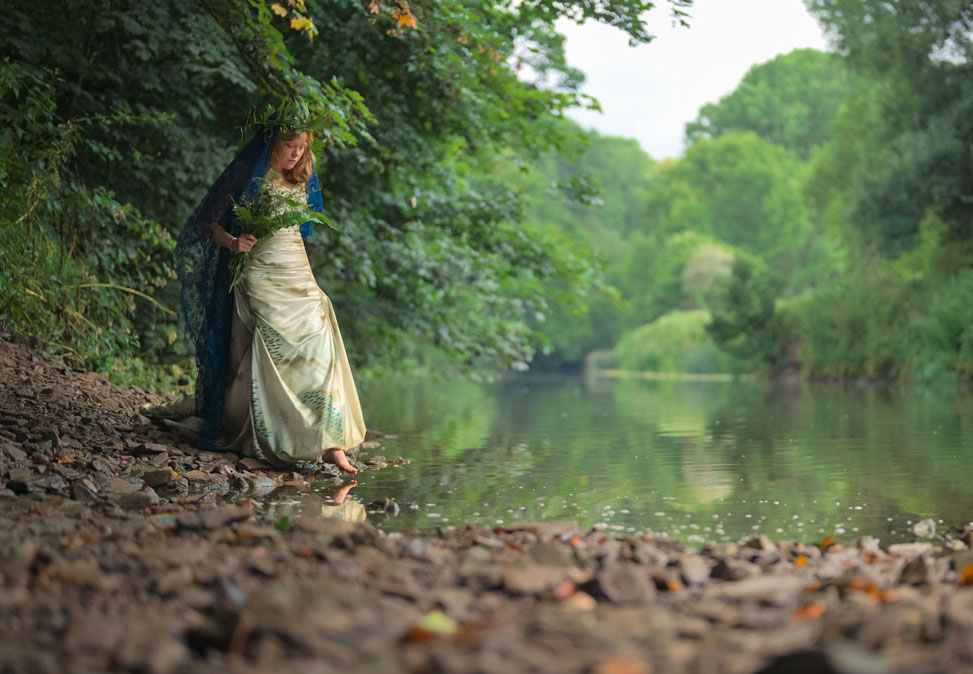
Rosanna Spence speaks to Meg Avon – who married the River Avon three years ago in a loving symbol of eco-activism – to discover what it means now the city council has taken the plunge and voted in favour of a charter that supports the water’s rights at a local policy level.
Bristolians might love the River Avon, but how are we looking out for its actual wellbeing? Stories of poor water quality and pollution have become an all-too-familiar part of the conversation around our waterways (issues which admittedly aren’t always under everyone’s control) but it can sometimes be easy to forget just how much we owe to these natural systems.
Bristol formed and flourished around its river; it’s helped shape our history, trade and identity, and continues to give the centre and neighbourhoods alike their character all these years later. Whether we’re walking the dog beside one of its tributaries, taking the plunge for a wild swim, enjoying a festival on its banks or simply crossing a bridge on the way to work, the Avon is part of everyday life.
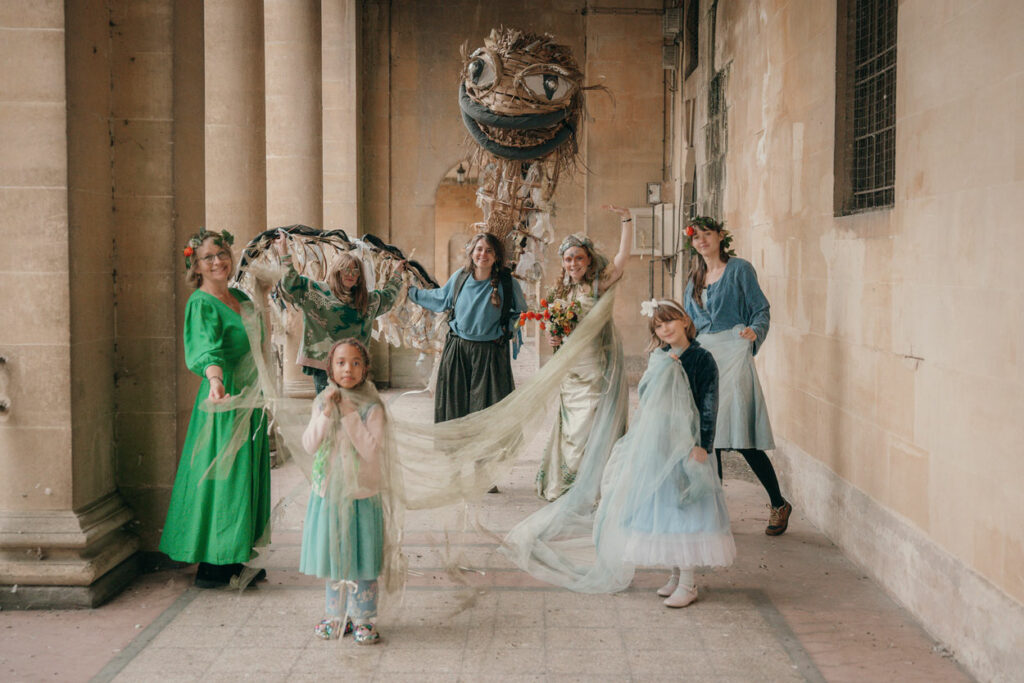
For Meg Avon, however, the relationship has become even more personal (the clue’s in the name). Three years ago, she ceremoniously wed the river – not the likeliest marital partner, some may say – in a symbolic act of love and environmental activism, hoping to bring people together and draw attention to the need to protect it in the same way we would humans.
Now, as Bristol City Council, as well as many other regional governing bodies, have voted in favour of a charter recognising the river’s rights at a local policy level (more on that in a moment), Meg’s unconventional campaign has reached a significant milestone.
Floating an idea
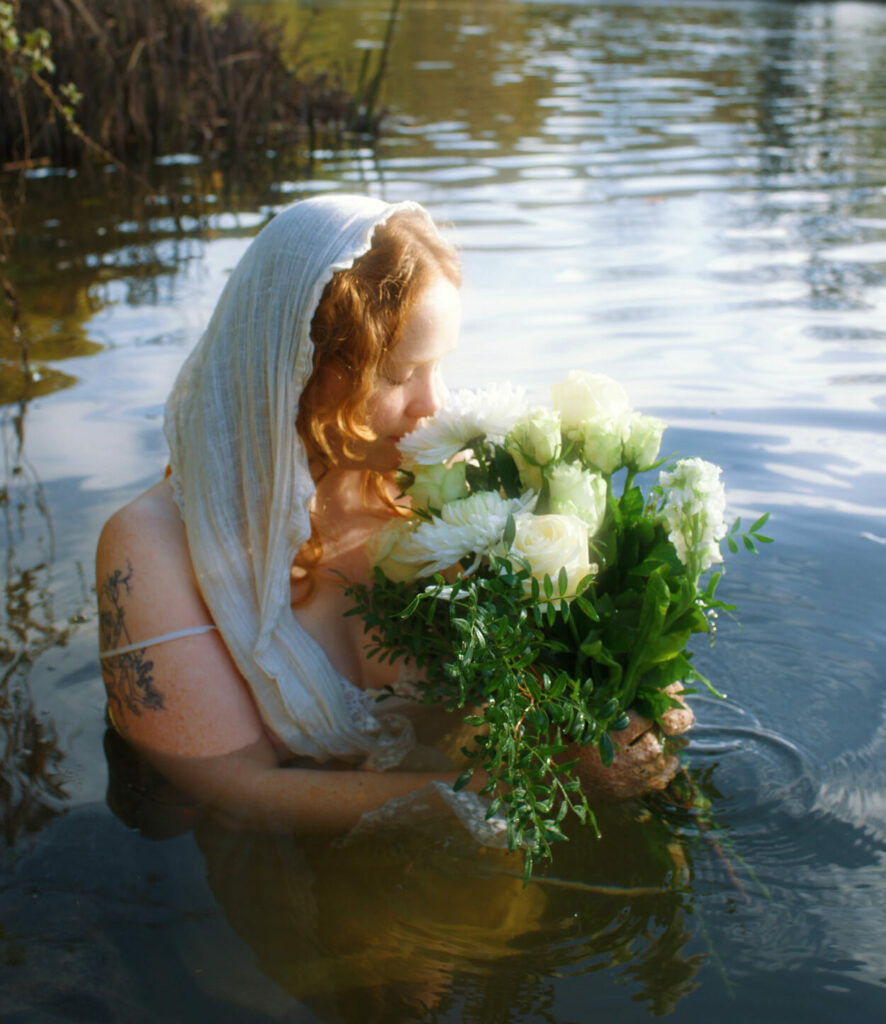
Growing up in Bristol, Meg was no stranger to outdoor swimming. She had swum in rivers for years, including during time spent studying in Brighton and living in Canada, but the stretch of the Avon running beneath the Suspension Bridge that she was most used to seeing never seemed particularly inviting.
“It always felt a bit scary and unapproachable, not marriage material at all,” she explains.
That changed during lockdown, when a friend took her on a cycle ride east to Conham River Park. What she discovered there wasn’t just a new swimming spot, but also a community of people who shared her enthusiasm for getting into the water.
“I just had no idea it was there the whole time I was growing up. I always described that day like one of those dreams where you discover another room in your house.”
The experience opened her eyes to both the beauty of the river and the problems affecting it. Meg had been aware of the Avon’s less-than-glamorous reputation, but not the full extent of the pollution caused by sewage, agricultural runoff and toxic chemicals.
She also began to appreciate just how much people needed these places. “There were all these other people who swim really regularly and needed to get into the water for mental health.”
It was this combination of community, wellbeing and growing environmental awareness that set her on the path towards becoming the UK’s first River Wife.
The wedding itself, Meg admits, wasn’t the result of some grand, long-held plan. Asked why she decided to marry a river, her answer is honest: “I was just trying to get some press attention.”
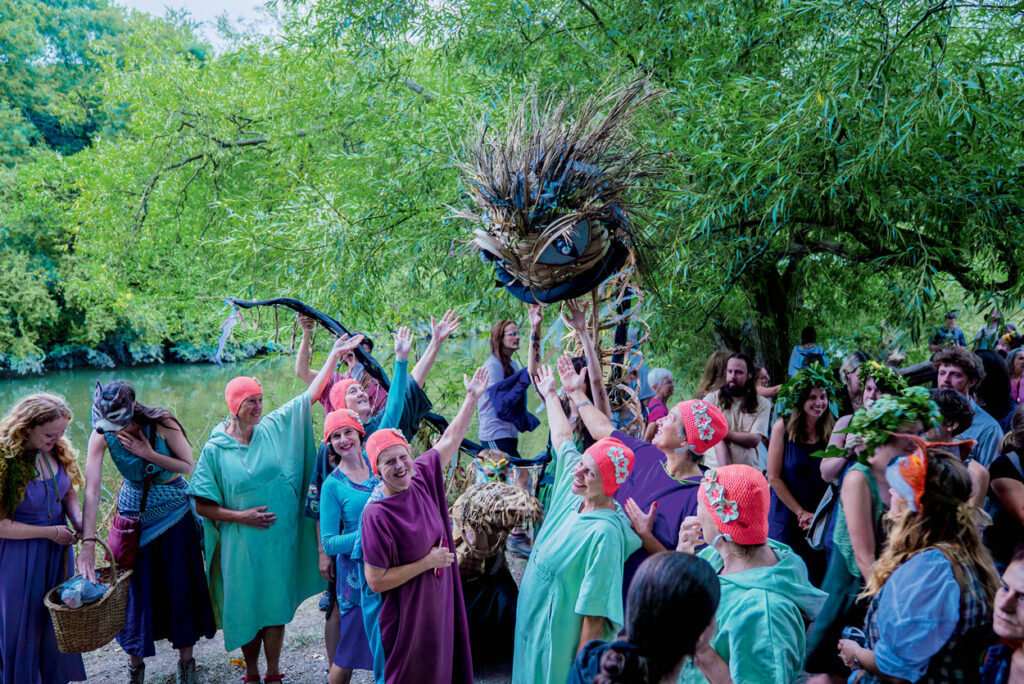
Her background was in community organising and activism, including working as a youth and play worker with young people in deprived areas of Bristol and Brighton. She was interested in keeping spaces open and accessible, particularly places that could support people’s physical and mental wellbeing. The wedding was intended to bring people together, including campaigners already working to raise awareness, test water quality and push for better protection.
What she hadn’t anticipated was quite how powerful this ceremony would be.
“I love everyone being brought together at weddings, with people doing public speaking for the first time and projecting their love into the world, into people’s hearts and minds,” she says. “There’s that honouring of a relationship, and how it’s not just two entities in that relationship, but it involves the whole community.”
For Meg, the wedding became a way to acknowledge the river as something worthy of love and commitment, while also recognising the damage being done to it. “Every ceremony involves a kind of loss. You’re acknowledging what you’re moving away from, but also something that you’re moving into.” But there was sadness beneath the celebration, too. “I was marrying a really unhealthy river.”
Ripples of change
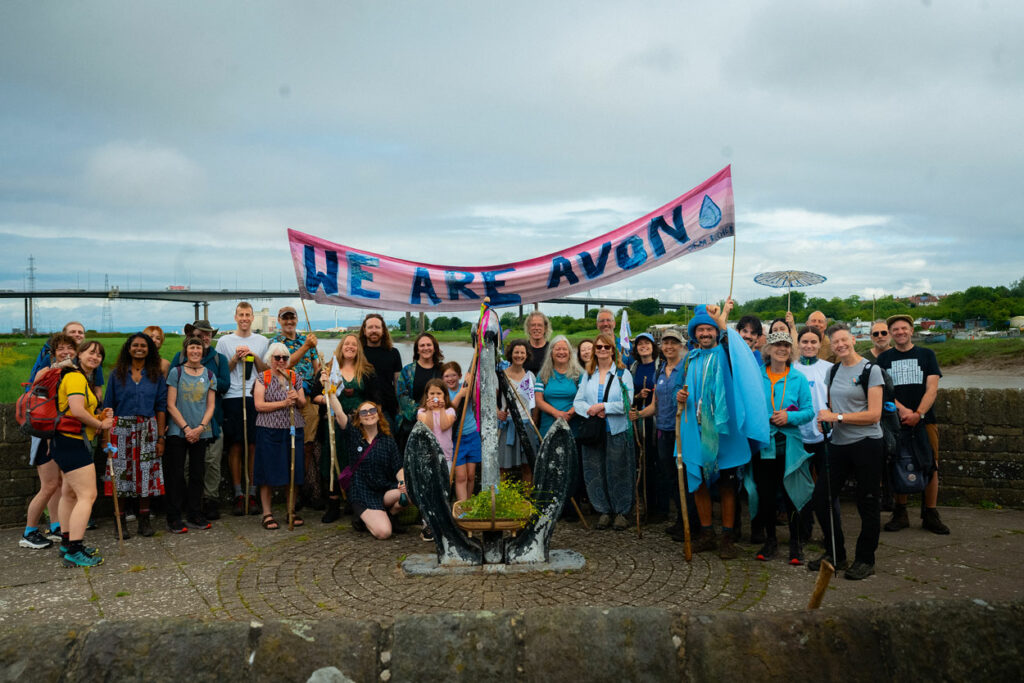
Since the ceremony, Meg’s work has developed into a wider campaign to change how the Avon is understood and protected. As River Guardianship Coordinator for environmental charity We Are Avon, she is helping to build support for the Avon Bioregional Charter of River Rights, which recognises the river’s right to exist and thrive naturally, flow sustainably, be free from pollution and maintain its biodiversity among other things.
The idea is to shift the conversation away from treating rivers simply as resources or places to dispose of waste, and towards recognising their inherent value.
“I just really want to continue with that message of hope,” Meg says. “That’s the value that I really gain: bringing people into the movement, seeing the connections that are made, and seeing how the work needs everybody’s skills and attention to shift this cultural narrative of rivers being just a space to take our waste away, as opposed to a divine entity that was literally the reason life exists on this planet and will continue on without us.”
The Charter is not a new piece of legislation, nor does it make the river legally equivalent to a person. Instead, its adoption at a local policy level gives communities and councillors a framework for arguing that the river’s interests should be considered in decisions that affect it.
As Meg explains, “These rights all point and link to existing environmental laws and known ecological thresholds. They have standing, meaning and impact, but we need to recognise that they are not legally binding in their own right.”
That doesn’t mean they are without value. The Charter can help strengthen arguments against developments that could harm the natural environment, while encouraging decision-makers to consider the river’s needs alongside human interests.
Meg is particularly keen to challenge the idea that nature and people are separate. The Charter for the Avon bioregion takes in the wider catchment and the life connected to it, rather than focusing on a single stretch of water or council boundary.
The bioregional approach, she explains, is intended to recognise the relationship between the river and everything that depends on it. “We would not be able to live without our natural environment. We are completely, utterly inseparable.”
A groundswell of support
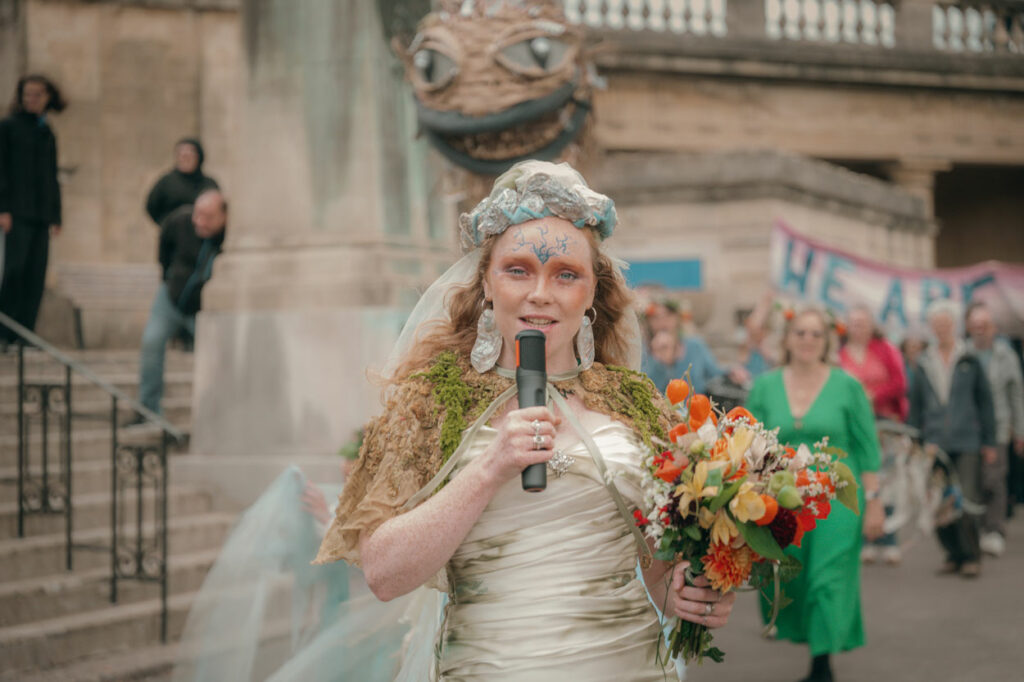
The Charter has been gaining backing from councils and communities across the Avon catchment. Bristol City Council’s vote in favour represents a significant milestone, but Meg is quick to acknowledge that this work did not begin with her wedding.
“We’re standing on the shoulders of giants,” she says. “Again, that language about recognising nature as alive and having inherent rights has been floated for years, before I was involved, while I was still at school.” She is also conscious that the public-facing nature of her campaign has helped bring attention to work that others have been doing for years.
For Meg, the Charter is as much about bringing people together as it is about policy. Rivers cross boundaries, and protecting them requires people who might not otherwise work together to find common ground.
“It’s been so cool bringing all these different councillors into the same room because they’ve never collaborated on anything like this before. It’s the river that’s bringing them all together.”
The next challenge is to turn recognition into action, whether through local decision-making, community projects or better understanding of the river’s condition. As well as many smaller, community-led projects are wider initiatives being developed, such as an Avon-wide independent water company investigation training with a wider long-term ambition to monitor other pressures and advocate with the data, which Meg says is intended to be the first project of its kind in the country.
“By doing all those different activities, all those individual River Guardians are building up their own relationship with the river and with each other,” Meg says. “That’s kind of what happened to me.”
Keeping hope flowing
Given the scale of the problems facing our waterways, hope might seem an unlikely resource to draw on. But it is central to Meg’s approach.
“This is an offer of hope because you can’t work on these massive issues in isolation. It doesn’t make any sense,” she says. “We all need the same amount of water, and all our towns, cities and villages are placed along these rivers. They are the heart of our community.”
Her own relationship with the Avon remains a daily source of connection. She aims to swim in the river once a week and takes a small bottle of its water to meetings, talks and conferences, returning it to the river afterwards.
“I’m now so aware of the water that comes out of my tap and where it goes. I feel like I’m part of the water cycle,” she says. “I have this daily practice with water, and I encourage that. That’s what I write my poetry about, and I love sharing that with people when I go and perform.”
It is a personal ritual that reflects the wider message of the campaign: water connects us, whether we notice it or not. “Water is just this big, big connector.”
Meg describes hope as a collection of small moments that can grow into something much larger. “It’s like those little drops of hope every day, and that vast, swelling ocean of hope.”
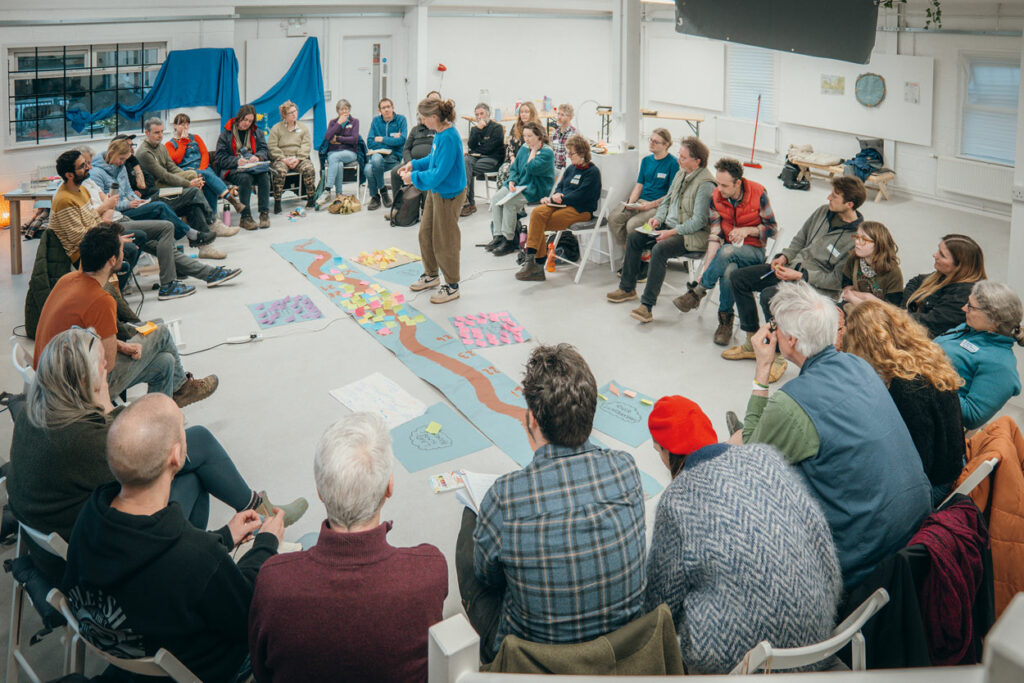
For anyone inspired to get involved, We Are Avon welcomes people to become River Guardians, with groups already established along the river and opportunities to take part in water investigation training, organise events or support the Charter. The organisation is also collecting public signatures, making it possible for people to show their support beyond the council chamber.
And what of the wedding? Meg has said she would consider officially marrying the Avon if the law eventually recognised the river’s rights. She sees it as a longer-term ambition, and a way of keeping the conversation moving. “Hopefully, I can convince people along the way that the end goal isn’t really the point,” she says.
It’s a fitting thought for a river, which is never simply a beginning or an end, but part of a continuing cycle. Three years after Meg’s symbolic wedding, the challenge is to make sure the love and attention it inspired translate into lasting change.
But while the headlines might focus on the challenges facing our waterways, Meg’s story and the Charter’s growing support serve as reminder that it’s time we started treating the river less like a backdrop to our lives and more like a living being we’re all responsible for.
For more information about Meg, as well as her poetry, visit mrsmegavon.com and follow her on Instagram @mrs_meg_avon.
To discover more about We Are Avon’s work, to become a River Guardian and to sign the Avon Bioregional River Charter online, visit weareavon.org. The Charter can also be signed in person at The Climate Hub, located inside the Bath Bus/Coach Station (BA1 1SS).