

From medieval masterpieces to Bristol’s own woven history celebrating a major milestone, the art of tapestry is having a moment… and there’s no reason the story should stop at the museum door. There are ways you can weave a little magic in your own home too, allowing tales to be told through artistic choices, interior design and soft furnishings.
Have you ever wanted to bring a little piece of history home? Perhaps an intriguing antique that has you marvelling at its craftsmanship, or you might just want a room in your house to be adorned with something a little more interesting than another piece of mass-produced art. Tapestries – whether historic artefacts or brand-new creations – have captured our imaginations for centuries, adorning buildings and transforming walls into storyboards through intricate details and decoration. They’re also enjoying something of a revival right now…
For anyone who has recently found themselves swept up in tapestry fever, there is plenty of inspiration to be found both across the country and on our doorstep. The Bayeux Tapestry is currently on display at the British Museum, where it has already proved quite the draw, with the museum confirming that it welcomed more than 100,000 visitors during the first month of the tapestry’s UK stay. It’s no surprise that people are queuing for hours to see one of the finest surviving examples of medieval storytelling. (Thankfully, there’s still time to make the pilgrimage: the tapestry is due to remain on display until July next year before returning home to France.) And for any Aardman addicts, the Natural History Museum also recently unveiled its own seven-metre, Bayeux-inspired Baa-Ewe Tapestry, starring Shaun the Sheep as an homage to the original creation.
Closer to home, our own woven wonder is celebrating a rather significant milestone. The Bristol Tapestry: A Stitch in Time turned 50 this year. The idea was conceived by Jean Tanner and Marjorie Bleasedale in the late 1960s as a way of recording important events from the city’s past. By 1976, the project was complete, involving more than 90 local people.
Technically, it isn’t actually a tapestry at all. Its 22 metres comprise a mixture of embroidery stitches, appliqué techniques and screen printing, arranged across four panels and 27 scenes depicting almost 1,000 years of Bristol’s history. It arrived at its current home at Bristol Museum & Art Gallery in 1999. As with any historical object, the tale it tells also reflects the era in which it was created; the way we choose to represent our history is, in itself, part of the story.
Fruit of the loom
But why should museums get to have all the fun? Inviting tapestry through your own front door doesn’t necessarily mean covering every available surface in medieval knights, mythical beasts and elaborate battle scenes. Its appeal lies in its versatility, and there are plenty of ways to introduce the look into a contemporary space without making your sitting room resemble a stately home.
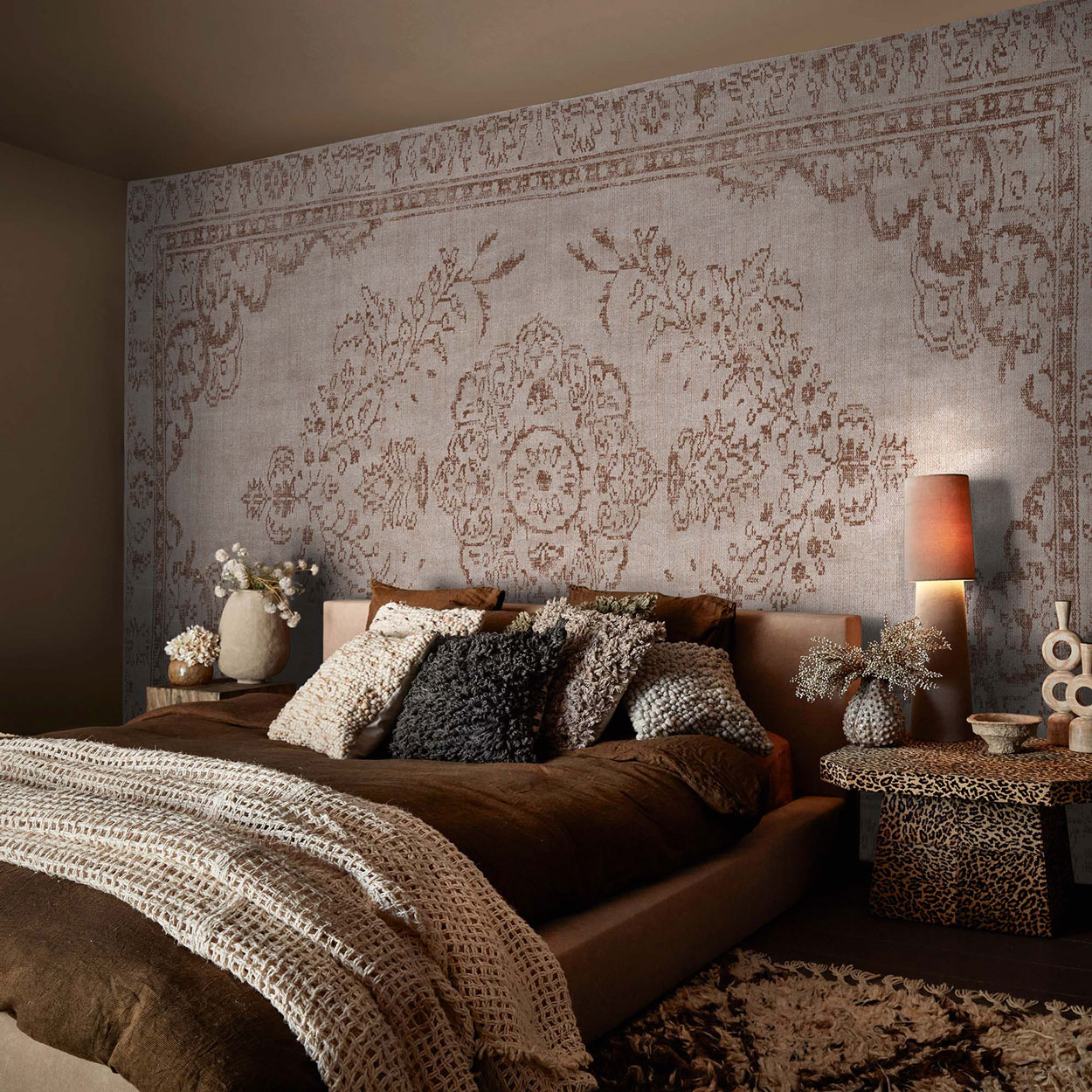
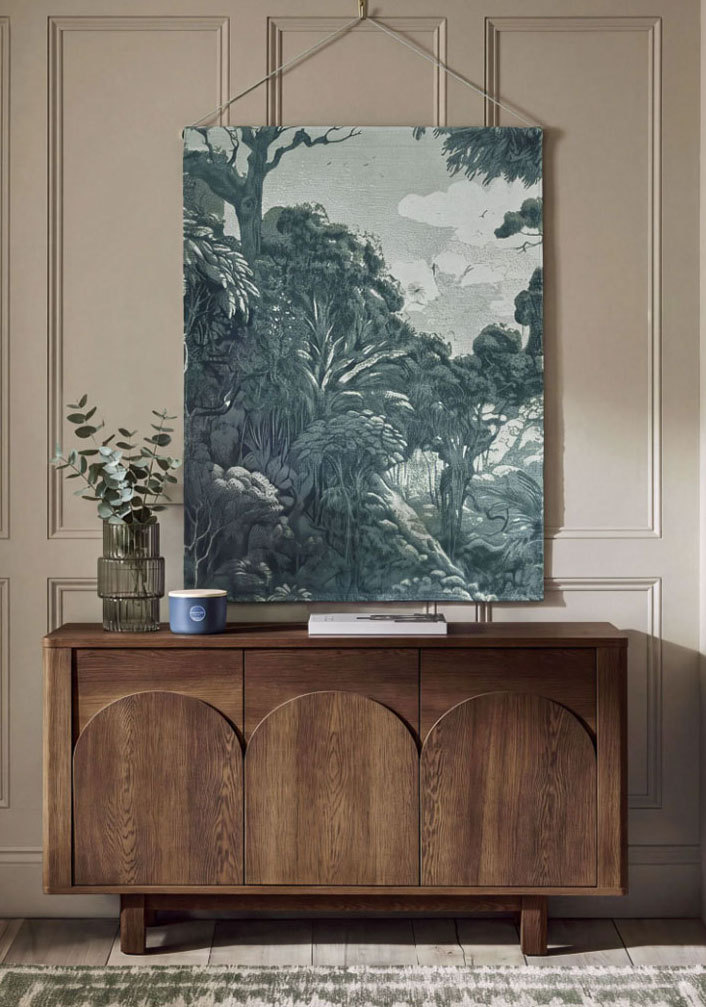
Perhaps the easiest starting point is a framed textile. A smaller woven artwork can work much like a painting, bringing pattern, texture and colour to a wall while adding a softness that a traditional framed print might lack. Alternatively, a larger tapestry can become a statement piece, particularly against a relatively pared-back wall. And don’t assume it needs to be hung conventionally: a beautiful vintage textile or embroidered throw can look equally effective draped over a rail, hung from a decorative pole or displayed as casually as you like.
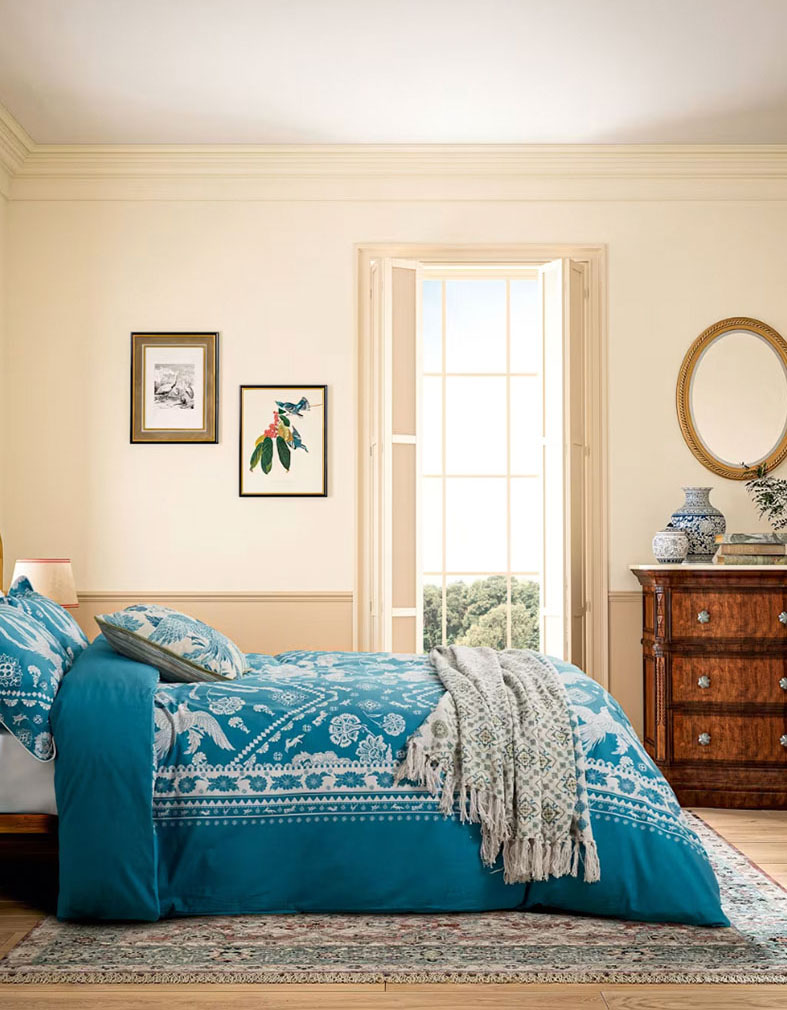
Then there are the even softer options. Cushions, curtains, throws and bedlinen can all borrow from tapestry’s rich, decorative vocabulary, while wallpaper can recreate the effect without requiring a single stitch. A tapestry-inspired motif might be as elaborate as a sprawling botanical scene or as simple as a repeating floral, geometric or folkloric pattern. The beauty of tapestry is that it can tell as much or as little of any story as you like.
Writing for British Vogue recently, Hannah Coates has noted the growing popularity of storytelling in interiors, from woven art and hand-painted furniture to murals and bespoke decorative details. Designers are increasingly incorporating personal symbols and histories into otherwise ordinary objects, she says, using examples such as fish and radishes on a bespoke table representing family life, zodiac signs worked into dining chairs, or tiles depicting the Jataka tales transforming a staircase into something with a deeper narrative. That idea is particularly useful when considering how to bring tapestry into your own home. Rather than asking simply, ‘Does this match the sofa?’, think about what you want the piece to say.
Is there a particular place, culture or period that inspires you? Do you want something traditional and decorative, or contemporary and abstract? Perhaps you’re drawn to botanical imagery, folklore or mythology, or would rather create a piece around your own family story. For a child’s bedroom, a tapestry-inspired design might feature animals, a landscape or a favourite story characters; elsewhere, a more sophisticated motif could provide a colourful focal point in an otherwise neutral room.
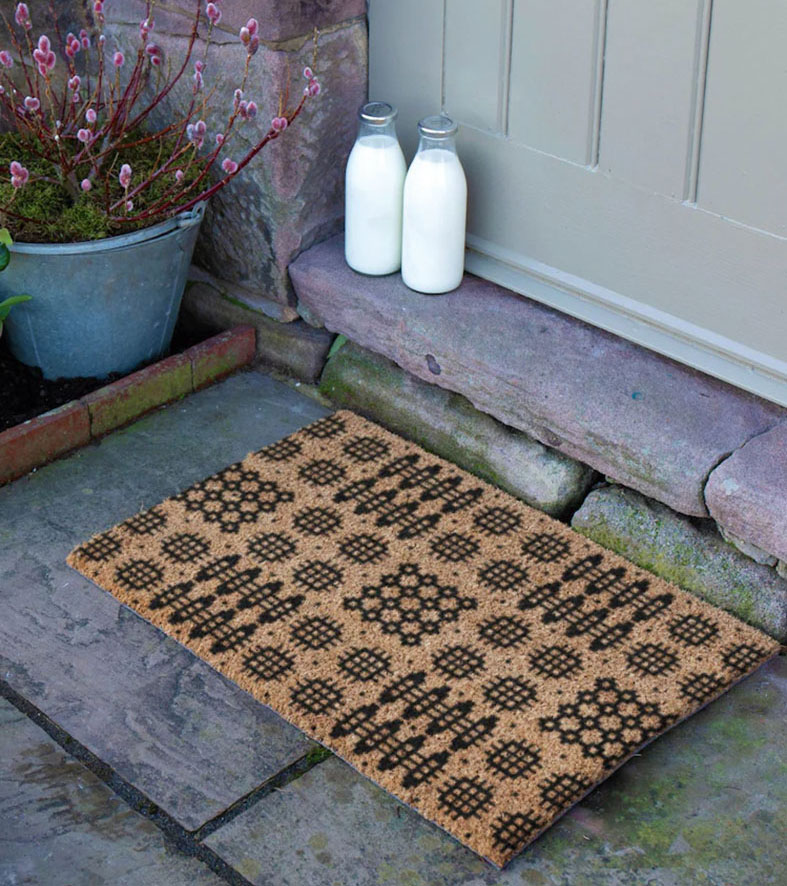
There are also plenty of choices when it comes to colours, materials and craftsmanship. The traditional association with tapestry might conjure up deep reds, ochres, greens and jewel tones, but there’s no reason to stick to the medieval palette. A contemporary interpretation in soft neutrals, faded pastels or monochrome can help ease a tapestry into your existing décor. On the other hand, a riot of colour can inject life into an otherwise restrained room. An antique tapestry brings with it the charm of age, patina and provenance, whereas a contemporary handmade piece offers the opportunity to commission something personal. And you don’t necessarily need to invest in a fully woven artwork: embroidery, appliqué, printed textiles and tapestry-style designs, as shown in the products highlighted on these pages, can all create the same sense of texture and visual richness.
A narrative thread
Tapestry has always been about more than decoration. From historic works depicting great events to richly patterned textiles that tell stories of people, places and cultures, woven art has a way of bringing character and meaning to the spaces we inhabit. And you don’t need to hang an antique masterpiece on the wall to enjoy its appeal.
Today, tapestry-inspired designs are finding their way into contemporary interiors in all sorts of ways, from decorative throws and upholstered headboards to textiles displayed as artwork. Take Little Greene’s Millefleur Garden wallpaper, for example (pictured below), whose floral design draws directly from a rare, lovingly conserved 15th-century tapestry at Somerset’s Montacute House – the oldest of its kind in the National Trust’s care. Its intricate design brings the spirit of the original into the home, without an antique thread in sight.
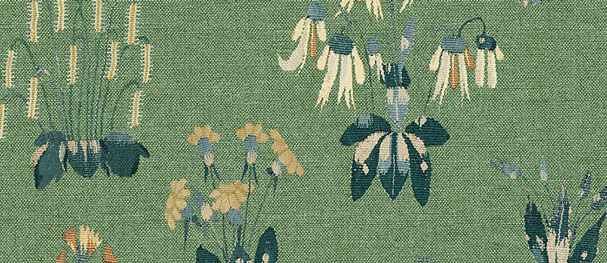
The influence extends beyond our walls, too. Tapestry-inspired fashion is having its moment, as a rather fetching jacket from Oliver Bonas on our fashion pages this month demonstrates. Whether worn or displayed, these richly patterned designs offer a way to bring a little more personality to the everyday. But perhaps the real appeal lies in the stories these textiles can tell.
The Bayeux Tapestry famously captures a moment in history, but contemporary interpretations needn’t look backwards. A favourite place, a family memory, a cultural tradition or simply a pattern we love can all provide inspiration. After all, the most interesting interiors aren’t necessarily those that follow the latest trends, but those that reflect something of the people who live in them.